

Drainage in Oxford
Reliable drainage systems begin below ground, where careful planning, accurate excavation, and correctly installed pipework help manage surface water, wastewater, and underground utilities for years to come.
Wastewater and Soakaways
Managing water effectively requires more than simply installing underground pipework. Drainage systems must be designed to control both wastewater and surface water while protecting surrounding land and nearby structures.
We install wastewater drainage routes for residential developments, commercial premises, and agricultural conversions, ensuring foul water is directed safely into the appropriate network.
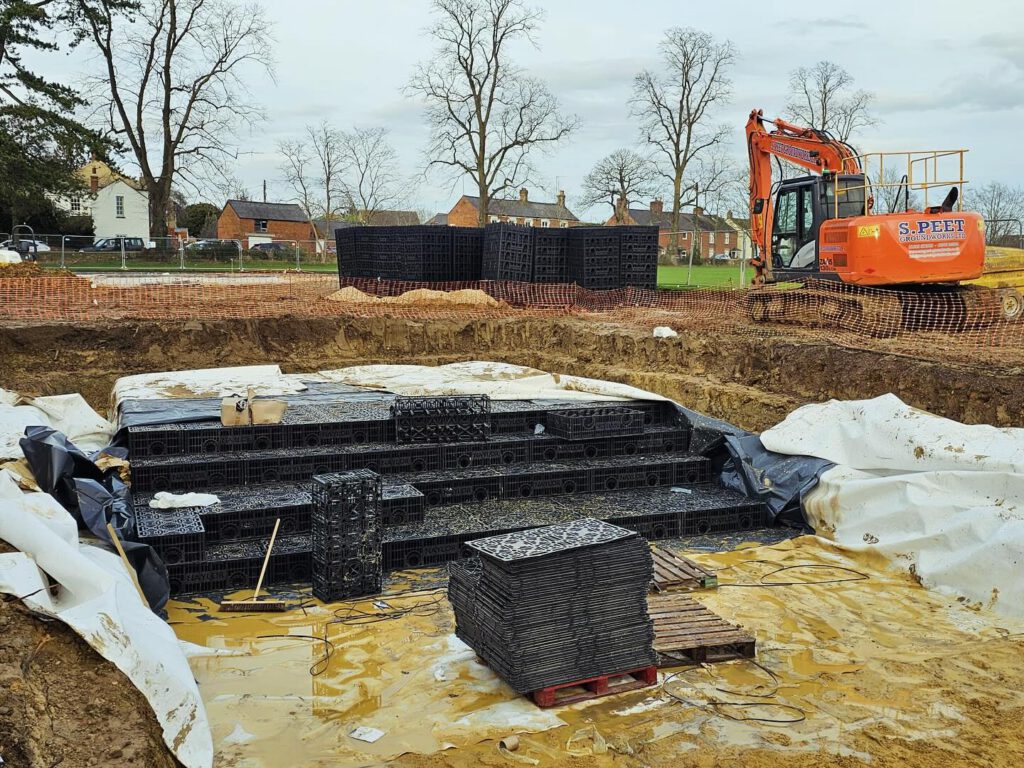
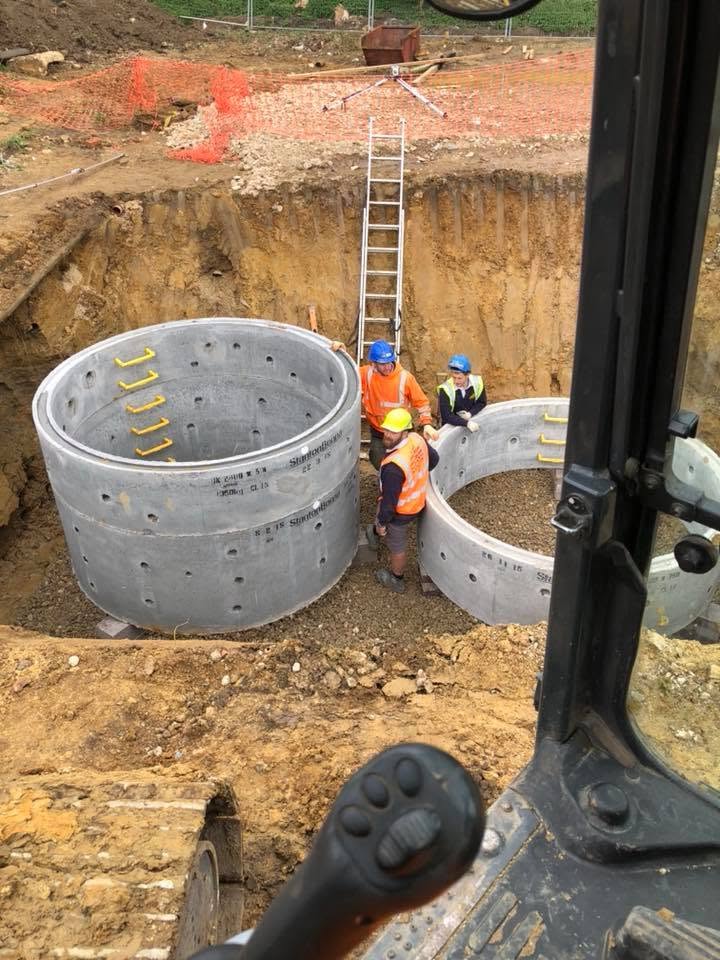
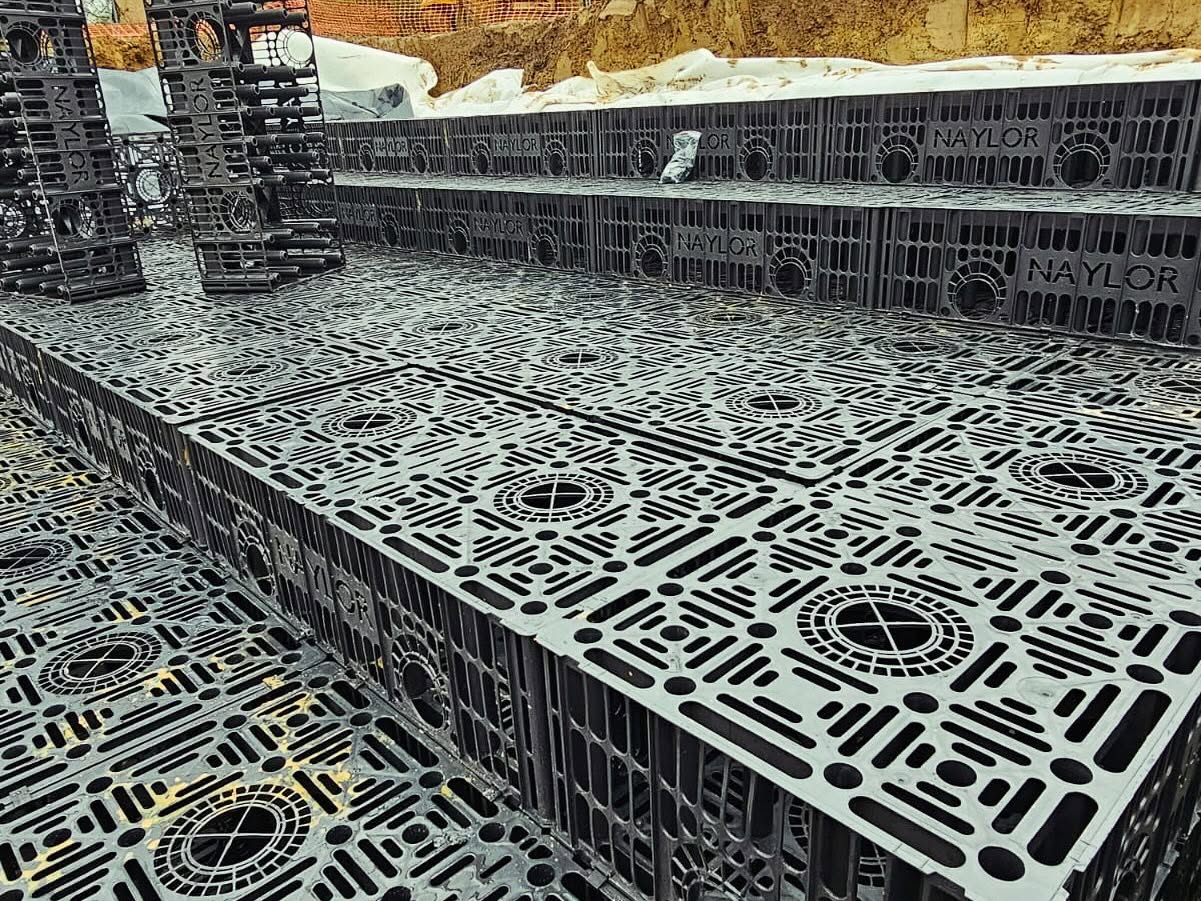
Storm water management is equally important, particularly on larger developments where hard surfaces increase surface water runoff. Drainage installation often includes soakaways, which allow rainwater to disperse naturally into the surrounding ground where conditions permit. Correctly designed soakaways can reduce pressure on drainage networks while helping to manage heavy rainfall.
Every drainage installation is planned around the individual characteristics of the site, taking account of existing ground levels, drainage routes, and future development requirements.
Commercial Drains and Civil Engineering Works
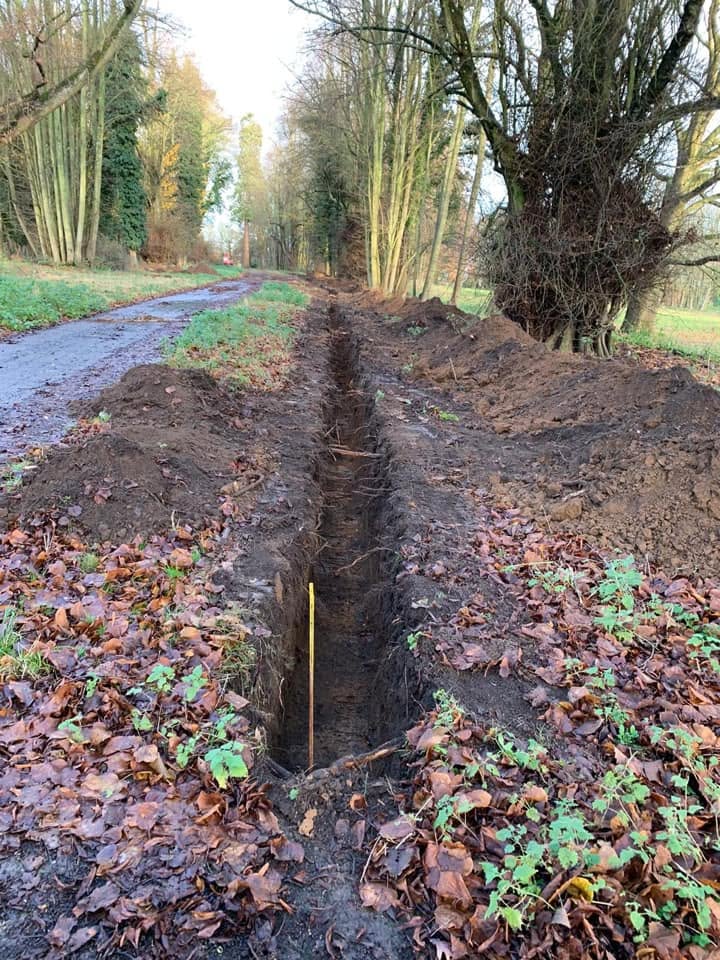
Commercial developments frequently require larger and more complex drainage infrastructure than domestic projects. Commercial drains must accommodate higher volumes of water while integrating with wider utility networks and site layouts.
We carry out drainage works as part of larger civil engineering projects, installing commercial drains alongside associated utility infrastructure and below-ground services. This includes excavation for sewer connections, utility crossings, inspection chambers, and surface water systems.
Our work regularly supports landowners, developers, and landscapers delivering new commercial premises, housing developments, and infrastructure improvements. Early coordination between drainage, excavation, and utility works helps construction programmes progress more efficiently.
Agricultural Conversions and Residential Developments
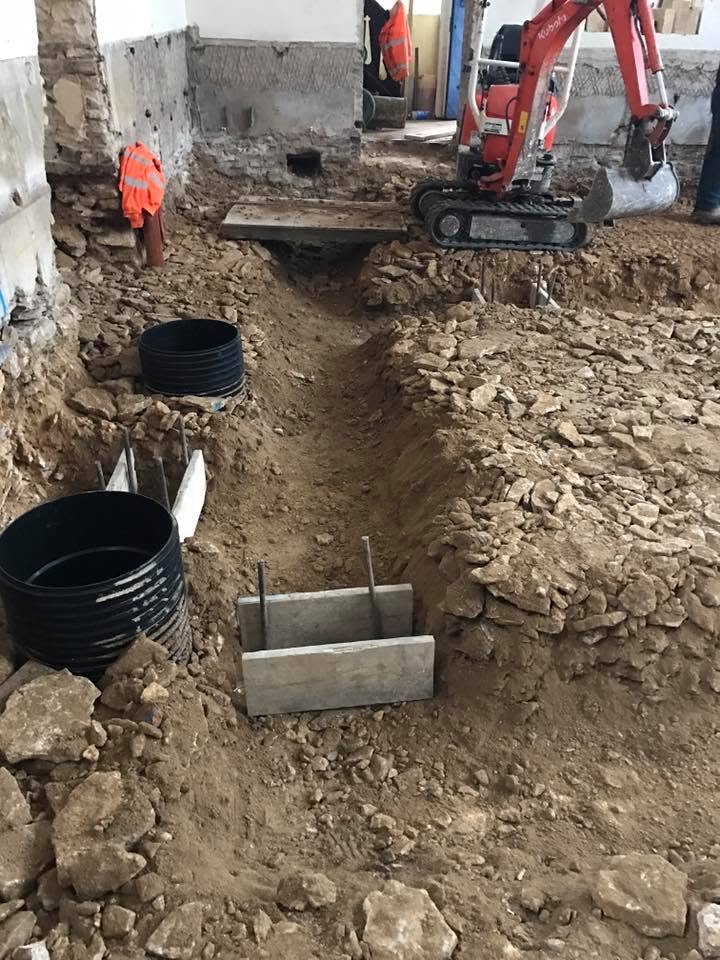
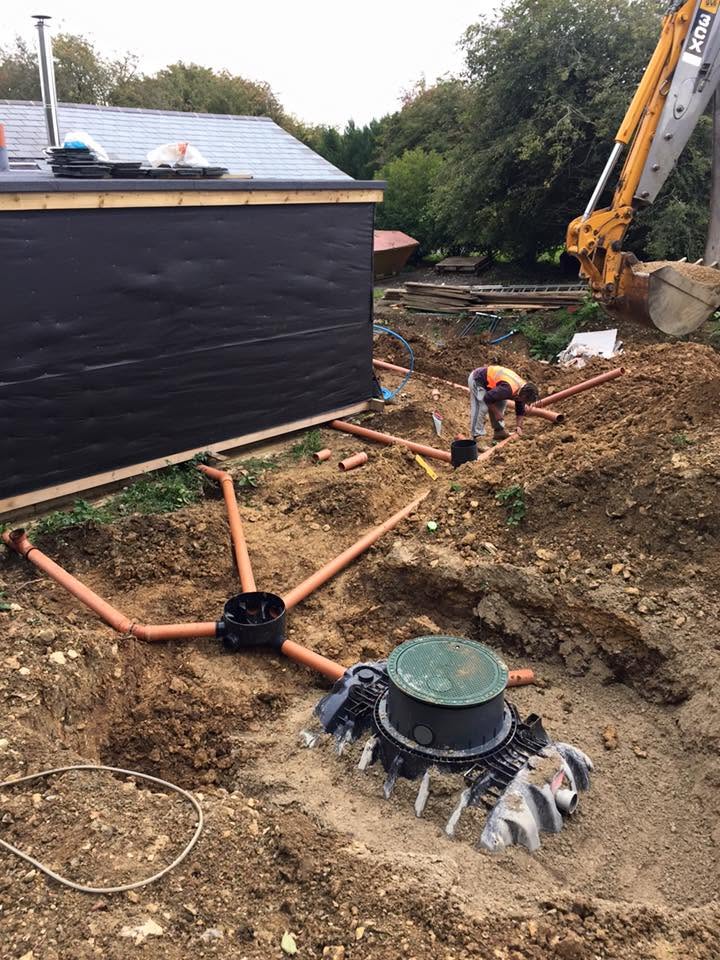
Changing the use of an existing building often requires entirely new drainage infrastructure. Agricultural building conversions, in particular, commonly involve installing new wastewater drainage routes, utility trenches, and connections to existing services.
We support developers and property owners converting agricultural buildings into domestic or commercial properties by preparing trenches for utilities and carrying out complete drainage installation works before construction begins.
For one-off house builds, drainage planning is equally important. Correct pipe gradients, suitable connections, and carefully positioned inspection points all contribute to reliable long-term performance.
Working Across Residential, Commercial, and Industrial Projects
Every site presents different challenges, but careful planning remains at the centre of successful drainage works.
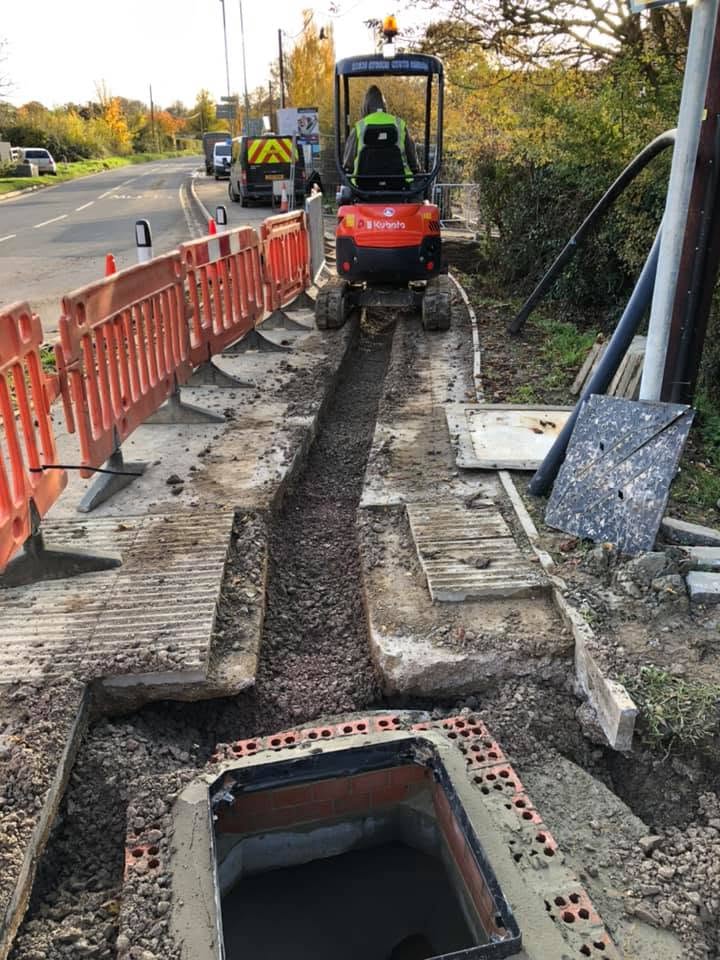
We work with homeowners building new properties or extensions, commercial clients delivering large-scale developments, and industrial projects requiring extensive below-ground infrastructure. Our experience also extends to working alongside developers, landowners, architects, and landscapers where drainage forms part of wider groundworks operations.
Whether installing new commercial drains, excavating utility trenches, or constructing soakaways, the objective remains the same: creating dependable underground systems that support the finished development.
FAQs – Drainage
Drainage installation typically includes trench excavation, pipe installation, inspection chambers, connections to sewer networks, surface water systems, soakaways, and wastewater drainage routes.
A soakaway is an underground structure that allows rainwater to disperse naturally into the surrounding ground. It is commonly used where site conditions are suitable to manage surface water runoff.
Yes. Drainage systems are installed for self-build homes, residential developments, extensions, and agricultural building conversions, including foul water, storm water, and utility trenches.
Yes. Commercial drains are generally designed to handle greater water volumes and often form part of larger utility and infrastructure networks serving commercial or industrial developments.
Get in Touch
Contact Sam Peets Groundworks if you need an experienced groundworker providing professional drainage services in the following areas: Oxford, Kidlington, Bloxham, Bicester, Witney, Banbury, Carterton, Chipping Norton, Moreton-in-Marsh, Stow-on-the-Wold, Bourton-on-the-Water, and the surrounding Cotswolds areas. Find us on 07973 625864 or 07951 796657.